Взаимосвязь профессиональной идентичности и степени сформированности представлений о траектории самообразования у студентов
DOI:
https://doi.org/10.33910/herzenpsyconf-2023-6-16Ключевые слова:
самообразование, траектория самообразования, представления о траектории самообразования, профессиональная идентичность, студентыАннотация
В условиях быстро развивающегося мира важной особенностью профессиональной деятельности становится ее изменчивость: прежние профессиональные навыки быстро устаревают, возрастают требования к умению профессионала быстро находить способы получения недостающих знаний, умений и навыков и эффективно приспосабливаться к переменам. Сформированность у специалиста представлений о траектории самообразования позволяет сделать этот процесс наиболее эффективным. В связи с этим становится важным изучение факторов и условий, обусловливающих степень сформированности данных представлений. Исследование было направлено на выявление взаимосвязи между профессиональной идентичностью и представлениями студентов о траектории самообразования. Выборка включала в себя 102 студента магистратуры 1 курса в возрасте от 20 до 50 лет (средний возраст – 25,5 лет), обучающихся психологическим, педагогическим и социологическим специальностям. Методами исследования выступали: анкета «Представления студентов о траектории самообразования» (Д. С. Гнедых, Ю. А. Хамаганова), опросник диагностики профессиональной идентичности студентов (А. А. Озерина), методика «Личный профессиональный план» (ЛПП) (Е. А. Климов, в адаптации Л. Б. Шнейдер). Выявлена положительная взаимосвязь (r-Спирмена) между представлениями студентов о траектории самообразования и компонентами профессиональной идентичности (сформированность, учебно-профессиональные планы и цели, образ профессионала, отношение к профессии, профессиональная позиция, образ профессии, профессиональная самооценка, зрелость профессиональной идентичности; p≤0,001), а также уровнем ее развития (p=0,004). Было установлено (U-критерий Манна – Уитни), что студенты со средним уровнем развития профессиональной идентичности имеют менее сформированные представления о траектории самообразования, чем студенты с высоким уровнем профессиональной идентичности (p≤0,001). На основе полученных данных могут быть разработаны рекомендации для преподавателей и студентов вузов, способствующие формированию более полных и четких представлений о траектории самообразования посредством развития профессиональной идентичности и ее компонентов.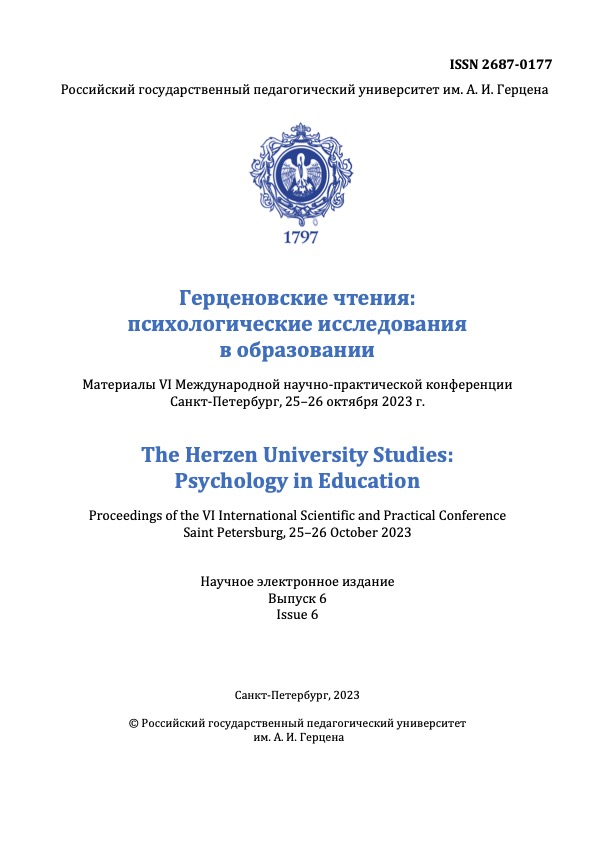
Загрузки
Опубликован
2023-11-24
Выпуск
Раздел
Статьи
Как цитировать
Гнедых, Д.С. and Панкина, А.В. (2023) “Взаимосвязь профессиональной идентичности и степени сформированности представлений о траектории самообразования у студентов”, Герценовские чтения: психологические исследования в образовании, pp. 122–129. doi:10.33910/herzenpsyconf-2023-6-16.